
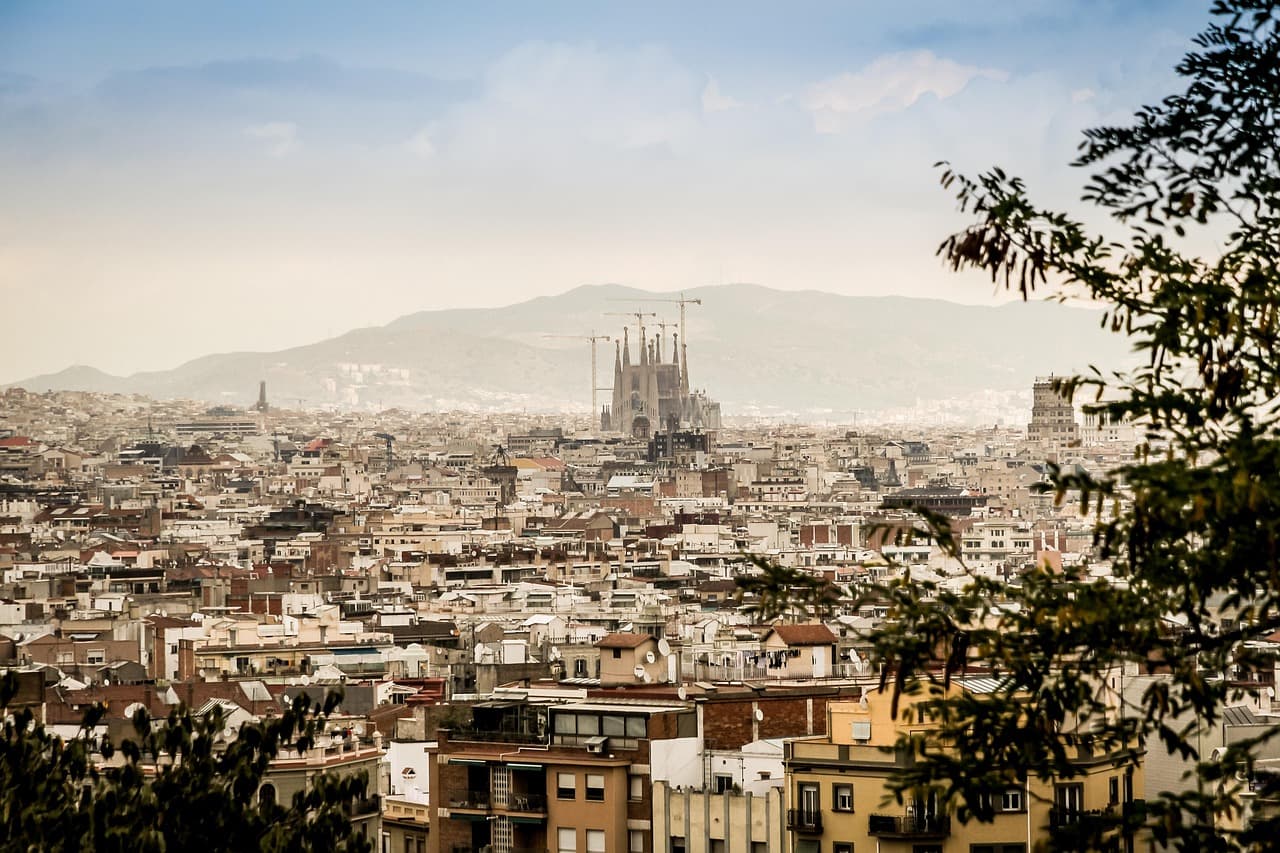
Barcelona is a city located in the northeast of Spain, specifically in the autonomous community of Catalonia. It is known for its rich culture, history, and unique architecture. Barcelona’s importance lies not only in its geographical location but also in its role as a European benchmark. The city attracts millions of tourists every year thanks to its dynamism and diversity.
Barcelona’s location is key to understanding its relevance in both the European and global contexts. This city, known for its vibrant culture and rich history, is in a strategic place that has influenced its development throughout the centuries.
Barcelona is situated on the northeastern coast of the Iberian Peninsula, facing the Mediterranean Sea. This gives the city direct access to the sea, facilitating trade and tourism. The region’s geography is characterized by a mountainous relief to the west, the Collserola range, which protects the city and contributes to its microclimate.
Geographically, Barcelona is part of the autonomous community of Catalonia, serving as its capital. Its proximity to other important cities, such as Girona and Tarragona, expands its regional influence and significance. Accessibility through a good network of roads and railways makes it a nerve center for both national and international mobility.
Barcelona’s situation in the European context is essential to understanding its role as a cultural, economic, and tourist meeting point. Throughout history, its location has allowed it to become a crossroads between different cultures and civilizations.
With a metropolitan population of approximately 5.3 million inhabitants, it is Spain’s second-largest city and one of the most important in the European Union. This city is not only an attractive tourist destination but also a commercial and business hub that fosters interaction with other nations. If you are looking for a more tranquil setting, you can even find a country house for sale in Barcelona that allows you to enjoy both the city’s dynamism and the charm of the surrounding countryside.
Some of the main advantages of its location include:
The history of Barcelona is a fascinating journey that reflects the evolution of a city influenced by different civilizations. Its rich cultural heritage has been forged over centuries, turning it into a key point on the Iberian Peninsula.
The origins of Barcelona date back to ancient times. Although it is difficult to pinpoint the exact date of its founding, it is believed that the city was established by the Phoenicians or the Carthaginians as a trading port. However, the most significant evidence suggests that its development took place during the Roman period.
Under Roman rule, Barcelona, known as ‘Barcino,’ experienced remarkable growth. The city was provided with walls, a forum, temples, and other infrastructure that laid the foundations for its later development. The Romanization of the region marked the beginning of a new era in which Roman culture merged with the local culture.
Some of the Roman remains are still visible today, providing tangible testimony to their influence on Barcelona’s urban structure and culture.
During the Early Middle Ages, Barcelona became the capital of the County of Barcelona, which strengthened its role as a political and economic center. This period was marked by a rise in commercial activity, as well as the consolidation of a distinct identity within the context of the Kingdom of Aragon.
The rise of the County of Barcelona
The County of Barcelona reached its peak under the leadership of influential counts who promoted trade, agriculture, and crafts. The expansion of the territory and marital alliances bolstered its power, making Barcelona a pivotal point in the political dynamics of the era.
Integration into the Crown of Aragon
By the end of the 12th century, the County of Barcelona became part of the Crown of Aragon, extending its influence in the Mediterranean. This union with other territories, such as Aragon and Sicily, led to an economic and cultural boom that left an indelible mark on the city.
With the Industrial Revolution, Barcelona was transformed into an important industrial hub. Rapid urbanization brought factories, immigration, and a significant demographic increase.
In the 20th century, the city went through difficult times, such as the dictatorship of Francisco Franco, which had a considerable impact on culture and social life.
Despite these challenges, Barcelona managed to rebound, gaining prominence in international events and transforming into a symbol of modernity and creativity in Europe.
Barcelona stands out as a meeting point of diverse cultures and traditions, becoming a benchmark for coexistence in a globalized world.
The cultural diversity of Barcelona is reflected in its population, which includes people from multiple backgrounds and nationalities. This mix enriches daily life and provides a wide range of traditions, festivals, and cuisine. It is currently estimated that around 20% of its inhabitants are immigrants from different parts of the world, such as Latin America, Africa, and Asia, contributing to a vibrant cultural mosaic.
The influence of these communities can be seen in many aspects of daily life in Barcelona, from its culinary offerings to music, the arts, and cultural events. Neighborhoods like El Raval or the Gothic Quarter exemplify this cultural fusion, becoming places where festivals from different traditions are celebrated, creating a unique atmosphere of coexistence.
Barcelona’s society has demonstrated its ability to integrate people from different cultures. In this regard, numerous projects have been carried out to promote respect and coexistence, helping to mitigate potential tensions between communities. Barcelona has been recognized for its approach to social inclusion, reflected in initiatives that encourage the active participation of all citizens in urban life.
Local celebrations, such as the La Mercè festivities or Carnival, are clear examples of how the city unites to celebrate diversity. These festivities not only foster social cohesion but also serve as a platform for different communities to showcase their culture and traditions to the public. Barcelona’s collective identity is strengthened through this cultural integration.
The city’s administration has implemented a series of policies aimed at promoting the cultural and social integration of the different communities residing in Barcelona. From educational programs that encourage language learning to initiatives that facilitate the employment of immigrants, these policies are designed to help build a cohesive social fabric.
Creating spaces where different cultures can freely express themselves is central to Barcelona’s integration policy. This includes annual cultural festivals that showcase music, dance, and traditions from different communities, as well as forums for dialogue between groups. The city aspires to be a model of coexistence, appreciating and valuing diversity as an invaluable asset for its social and cultural development.
Barcelona has experienced significant economic growth in recent decades, becoming one of the most dynamic cities in Europe. This development is based on various industries that drive its economy and transform its image as a hub for business and tourism.
The service sector is the cornerstone of Barcelona’s economy, employing a large percentage of the local population. Within this sector, tourism plays a crucial role, attracting millions of visitors each year. The main reasons why Barcelona is a preferred destination include:
In 2019, Barcelona received more than 12 million tourists, generating a significant impact on the local economy. Hotels, restaurants, and businesses benefit from the flow of visitors, contributing to job growth and income generation.
Barcelona has been able to adapt to new economic trends, positioning itself as a hub of innovation and technology in Europe. The city is home to numerous startups and tech companies, fostering an ecosystem that encourages creativity and entrepreneurship. Some of the factors that favor this development include:
Barcelona has established itself as a venue for global events in the technology sector, such as the Mobile World Congress, which attracts professionals from around the world and places the city at the forefront of innovation.
The Port of Barcelona is one of the most important in the Mediterranean and plays a fundamental role in the city’s economy. Its strategic location enables connections to various trade routes, facilitating the import and export of goods. This port is not only vital for trade but is also a major arrival point for cruise ships, contributing to the tourism sector. Its standout features include:
Thanks to these maritime connections, Barcelona benefits from a constant exchange of products and services, contributing significantly to its economy. These features make the port an essential element in the city’s economic growth.
Barcelona stands out for its vibrant cultural heritage, deeply rooted in history and creativity. The city is a true open-air museum, where architecture, history, and a flourishing artistic environment merge.
One of Barcelona’s main cultural references is Antoni Gaudí, whose works have left an indelible mark on the city. His unique approach and innovative vision have produced architectural creations that are true Modernist gems.
The Sagrada Familia
The Sagrada Familia is undoubtedly Antoni Gaudí’s most iconic work. This basilica, under construction since 1882, is a symbol of the city and attracts millions of visitors every year. Its scale and the richness of its details reflect the deep religious devotion of its creator and his desire to create a unique space.
The combination of Gothic and Modernist styles, along with the temptation of technical innovations, makes the Sagrada Familia an exceptional site. Its unfinished nature adds an element of mystery and intrigue that sets it apart from other cathedrals in the world.
Other Modernist works
Barcelona’s cultural offerings are vast and diverse, featuring a variety of museums that explore different aspects of history and art. Some of the most notable include:
Barcelona is known for its lively cultural calendar. All year round, the city hosts a series of festivals and events that celebrate its artistic diversity. Among the most notable are:
Barcelona, located on the northeastern coast of the Iberian Peninsula, boasts a variety of geographical and climatic features that make it a unique place. Its situation next to the Mediterranean Sea has a significant influence on its natural environment and weather conditions.
The Mediterranean Sea plays a crucial role in the geography of Barcelona. This body of water not only shapes the coastal landscape but also moderates the city’s climate. The warm waters of the Mediterranean are responsible for mild temperatures throughout the year, favoring both agriculture and tourism. Some highlights of this influence include:
Barcelona benefits from a typically Mediterranean climate characterized by mild winters and hot, dry summers. This climate not only appeals to tourists but also influences the daily lives of its inhabitants. Some key features of the city’s Mediterranean climate include:
Barcelona’s natural attractions, such as its mountains and beaches, are enhanced by this type of climate, making the city an ideal destination for nature lovers. Places like Montjuïc Mountain or Barceloneta Beach exemplify how geography and climate intertwine to offer leisure and recreation areas.
Barcelona also emphasizes the sustainability of its natural spaces, recognizing the importance of preserving its environment. Some of the most notable green areas include:
The city has implemented various initiatives to promote sustainability and protect these spaces, such as reforestation projects and biodiversity conservation efforts. As Barcelona continues to grow, its commitment to the natural environment becomes increasingly relevant, ensuring that future generations can enjoy its unique geographical and climatic features.
Barcelona’s infrastructure and transport system are essential elements for the city’s functioning. This complex network enables efficient connections between its various areas and with other regions, facilitating mobility for both residents and visitors.
Barcelona has a highly developed public transportation system, offering various efficient means of getting around. These include:
Barcelona’s road network is designed to facilitate both internal traffic and external connections. Through a series of expressways and highways, the city is well-connected to other towns in Catalonia and Spain. Some of the most significant roads include:
Barcelona–El Prat Airport, located about 12 kilometers (7.5 miles) southwest of the city center, is one of Europe’s leading airports. This hub not only serves domestic flights but also connects to international destinations. It is the gateway for millions of tourists each year, and its importance lies in several factors:
Barcelona faces several urban challenges on its path towards sustainability. As the city expands and evolves, it is crucial to address issues that affect the quality of life of its inhabitants and the environment.
The pressure on Barcelona’s urban resources is a significant phenomenon that has been increasing. The city’s high population density, along with a growing number of tourists, has led to higher demand for basic services such as water, energy, and housing. This has placed considerable stress on existing infrastructure.
Transport, healthcare, and education systems must continually adapt and improve to meet the needs of a growing population. Often, management policies do not keep pace with urban development, resulting in saturated services and quality-of-life issues.
Gentrification is another challenge Barcelona must tackle. This occurs when traditional neighborhoods undergo a transformation that raises housing prices, pushing out low-income residents. The arrival of new businesses and the remodeling of historic buildings attract more affluent residents, altering the city’s social makeup.
In response to these challenges, Barcelona has implemented various sustainability and mobility initiatives to improve the city’s quality of life. Promoting sustainable mobility is one of the local administration’s priorities. Efforts to encourage cycling and walking as alternative means of transport are underway.
Additionally, initiatives to promote the use of renewable energies and reduce the city’s carbon footprint are underway. For example, installing solar panels in public buildings and implementing sustainable waste management are practices that have been gradually introduced.
Find your farmhouse, country house, town house or rustic farm.