
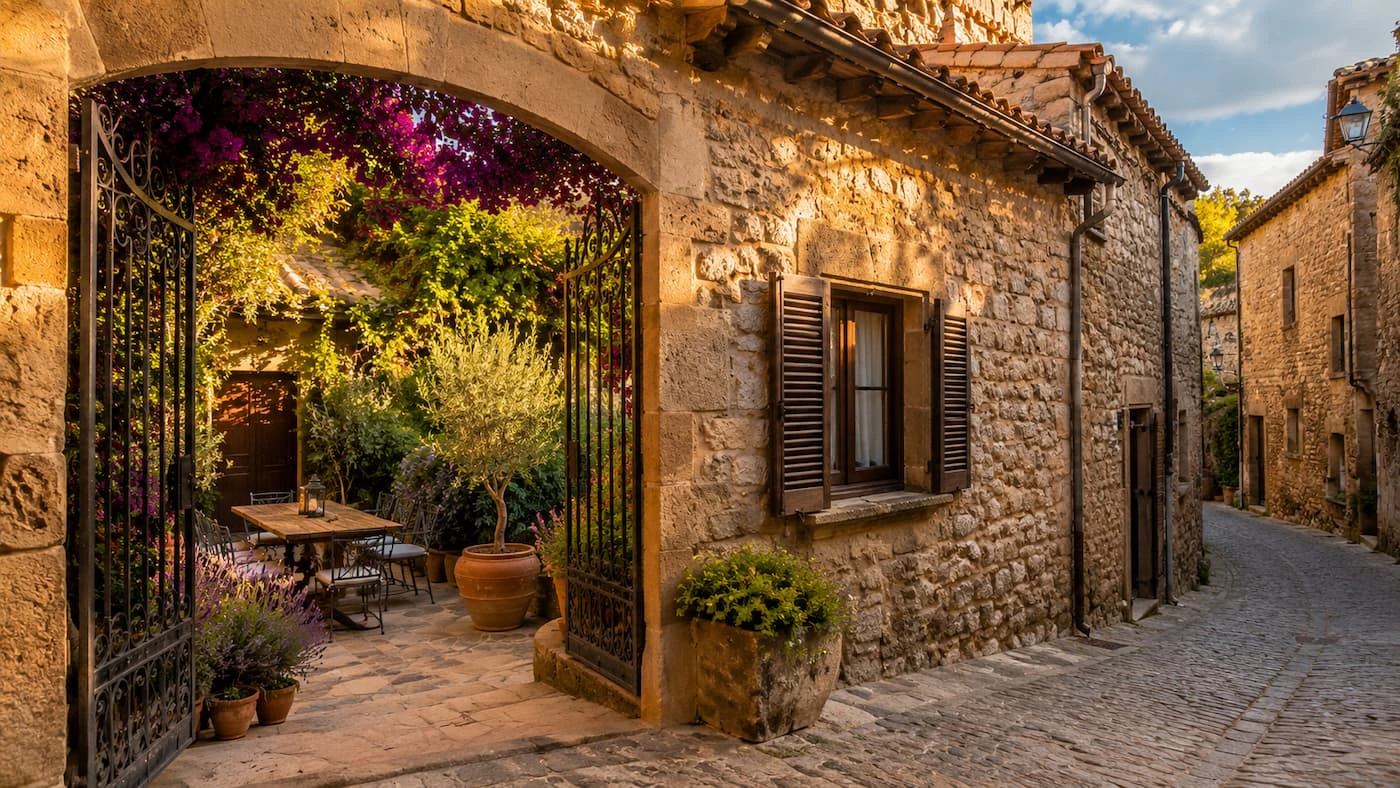
The appeal of exposed stone, noble wooden beams, and reconnecting with nature has stopped being a mere holiday trend and has become one of the most solid real estate movements of recent years. In the heart of peninsular northeastern Catalonia, the market for country properties and second homes is seeing unprecedented demand.
However, when we talk about investing, exclusivity, and quality of life, a key question arises: which are the most highly valued village houses in Catalonia’s rural areas, and what makes them so sought-after?
If you’re looking to buy a historic home, restore a traditional building, or simply find your next rural retreat in Catalonia’s territory, at Buscomasia we analyze the value drivers, architectural construction typologies, and the geographic areas with the strongest reputations in today’s market.
Not all properties in rural settings carry the same weight in the market. Traditional Catalan architecture has distinctive features that are highly prized by architects, investors, and private buyers. The typologies with the highest market value and interest are:
Traditional Catalan Masia: The crown jewel of rural heritage. These isolated agricultural buildings, whose origins date back to the Middle Ages, stand out for their load-bearing stone walls, gabled roofs, and south-facing orientations to optimize natural thermal efficiency. A listed masia multiplies its value when it still retains original elements such as vueltas catalanas (flat brick vaults), inscribed stone lintels, and old wine presses.
Village Houses of Volcanic Stone or Limestone: Located within historic medieval urban centers. Their value lies in the protected historic façade, interior courtyards (horts), and the way they are architecturally integrated into cobblestone villages that prohibit disruptive modern construction.
High-Mountain Edges and Huts: Typical of the Pyrenees, characterized by thick slate walls and black slate tile roofs—ideal for slow life architecture or high-end luxury snow tourism.
The value of a rural property in Catalonia follows a golden rule: the combination of landscape preservation, architectural authenticity, and connectivity to major urban hubs or the Costa Brava. These are the leading regions by valuation:
Many consider it the “Catalan Tuscany.” The Baix Empordà area is home to rural towns where the most expensive—and most valued—square meter across the entire autonomous community can be found.
Reference Municipalities: Peratallada, Pals, Monells, Madremanya, and Cruïlles.
Why they’re valued so highly: Their proximity to some of the most exclusive beaches on the Costa Brava (such as Calella de Palafrugell or Begur) and their connectivity with Girona and Barcelona. Here, village houses stand out for their luxury renovations that blend contemporary interior design with intact medieval structures.
For those looking for an environment full of lush nature, the Natural Park of the Volcanic Zone of La Garrotxa is a premium ecosystem.
Reference Municipalities: Santa Pau, Besalú, and the scattered masias across the Vall de Bianya or the Vall d’en Bas.
Why they’re valued so highly: The rural building typology here benefits from extensive private wooded land and highly sought-after dark volcanic stone architecture on the international market—particularly for buyers seeking absolute privacy.
Catalonia’s Pyrenees offer the highest valuations for homes geared toward active tourism, skiing, and high-mountain retreats.
Reference Municipalities: Puigcerdà, Llívia, Bagergue, and Arties.
Why they’re valued so highly: These are elite winter destinations. Stone, wood, and slate village houses in these areas operate in a highly exclusive market, where luxury services and panoramic views of the Alpine surroundings ultimately determine the final appraisal.
An alternative with extremely high cultural and landscape value, less than an hour and a half from the Catalan capital.
Reference Municipalities: Rupit i Pruit (internationally recognized for its conservation), Tavertet, and Mura (in the Bages).
Why they’re valued so highly: Tavertet, for example, is suspended over cliffs overlooking the Sau reservoir, offering one of the most dramatic and exclusive geographic locations. Homes in Rupit have protected heritage value, ensuring that the investment won’t lose its historic character over the decades.
If you’re analyzing properties on a specialized platform like Buscomasia, these are the elements that set a standard village house apart from a high-value rural real estate property:
Valuation Factor | Impact on the Rural Market |
Degree of Historical Listing | Masias included in the Pla Especial de Masies i Cases Rurals have heritage value that limits modifications while ensuring the asset’s exclusivity. |
Access and Utilities | In scattered rural areas, having legalized water wells, a three-phase electrical connection, and fiber optics increases appraisal value by up to 25%. |
Private Outdoor Land | The presence of a jardí tancat (walled garden) in the town center, or of hectares of farmland/woodland if the property is isolated. |
Orientation and Views | The iconic silhouette of masias facing sol ixent (rising sun) or with unobstructed views of mountain massifs such as Montseny, Pedraforca, or the Gavarras. |
Identifying which village houses are the most highly valued in Catalonia inevitably leads us to look at the Baix Empordà, Cerdanya, and Garrotxa. However, the true value of these rural properties goes beyond the built square meters: it lies in their ability to offer a sustainable, historic, and private way of life.
Catalonia’s rural real estate market is mature and resilient. Buying or restoring one of these homes protects capital in a tangible asset that increases in value as protected rural land becomes scarcer.
Are you looking for your next property, or want to discover the best options available in the Catalan market? Explore our specialized catalog on Buscomasia and find masias, stone houses, and charming properties ready to write your next chapter with you.
Find your farmhouse, country house, town house or rustic farm.