
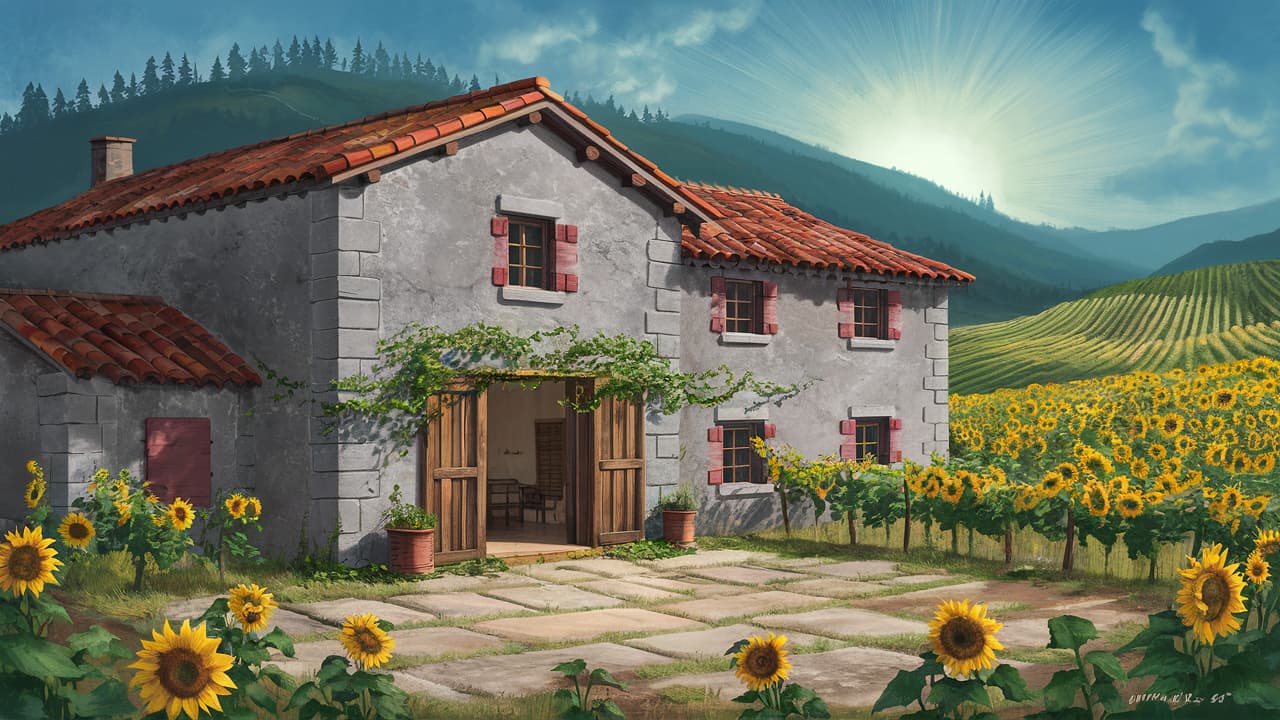
The Catalan farmhouses are unique architectural gems in the rural world. As you traverse the landscape, you come across these Catalan farmhouses that serve as living witnesses to the history, culture, and art of Catalonia, with each one preserving a fragment of the past.
These structures, which originated in medieval times, have evolved over time, reflecting both the agrarian economy and the region’s identity and autonomy. With numerous bedrooms in each house, they accommodated farming families, and their circulation boosted the sale of their products in surrounding regions. The farmhouses spread throughout Catalonia, integrating harmoniously into the natural environment and preserving the architectural heritage of centuries past.
A legacy worthy of admiration.
The Catalan farmhouses represent a living testament to the cultural and architectural wealth of Catalonia. Each one reflects a heritage that connects past and present.
They are typically found in the countryside, bearing witness to times long past.
In essence, these rural buildings embody the confluence of functionality and craftsmanship, serving as both homes and centers of agricultural production. Architecturally, they feature stone walls, tiled roofs, and expansive surfaces—distinctive elements that stand the test of time.
This rich architectural heritage has become a symbol of the effort and resilience of generations. Today, Catalan farmhouses not only evoke history but also inspire a sustainable and creative future, finding their place in contemporary projects that value and respect tradition.
They are, in short, a bridge between cultural heritage and modern innovations.
Their roots date back to the 9th century.
The Catalan farmhouses emerged as a response to the need for self-sufficient agricultural units. These constructions, dating from medieval times, were designed to protect their inhabitants and optimize agricultural production. Originally, they were the center of agricultural operations, where entire families lived and worked together to ensure their survival.
The expansion of these buildings was remarkable.
The 17th and 18th centuries marked a golden age for the Catalan farmhouses, with an architectural boom that broadened their structures with distinctive ornamental elements. During this period, the farmhouses gained a reputation as vital economic and social epicenters.
Today, Catalan farmhouses endure as historic monuments, emblematic of the cultural resilience and adaptability of the Catalan people. Many are available for purchase, offering a unique opportunity to own a piece of this heritage.
Many have been carefully restored, combining modernity and tradition, and demonstrating a commitment to sustainability. These ancestral dwellings authentically reflect the past that lights the way toward a promising future.
The architectural evolution of Catalan farmhouses reflects genuine adaptations to changing times, symbolizing resilience and longevity.
Initially, these buildings were simple, composed mainly of stone and wood, and designed to withstand harsh weather conditions.
Over the centuries, new materials and styles were incorporated, reflecting Renaissance and Baroque influences. Today, the integration of modern elements into Catalan farmhouses stands as a testament to their ongoing innovation, positioning them as pioneering and sustainable.
Catalan farmhouses, a reflection of the Mediterranean essence, stand out for their harmonious design that merges functionality with beauty.
This architectural style symbolizes a deep connection with the natural environment.
Distinctive elements such as terraces, interior courtyards, and large windows make Catalan farmhouses true gems of Mediterranean design.
During the Middle Ages, Catalan farmhouses underwent notable architectural transformations driven by various socioeconomic factors.
These changes not only protected the properties but also propelled rural economic development.
The architectural adaptation of this period attests to the resilience and creativity of Catalan communities.
Catalan farmhouses are characterized by their robust stone facades and red roof tiles.
Small windows and arched entrances lend a distinctive touch to the house, providing protection from the weather and ensuring privacy. These buildings are often organized around a spacious central courtyard that facilitates agricultural activities and social gatherings.
Sloped roofs are a distinctive element in Catalan farmhouses, ingeniously designed to fulfill multiple essential purposes. Historically, these roofs have provided effective solutions for varied weather conditions, from heavy rains to hot summers.
Catalan farmhouses stand out for their use of local materials that reflect a deep respect for the surrounding natural environment.
In short, the choice of these materials not only reinforced the structure but also symbolized a commitment to sustainability.
Catalan farmhouses are remarkable for their perfect integration with the surrounding natural environment.
This harmonious design reflects a deep reverence for the landscape, ensuring exceptional energy efficiency by remaining cool in summer and warm in winter.
The interior courtyards in Catalan farmhouses are oases of light and natural ventilation.
These courtyards have been essential in adapting to varying climates.
The interior decor of Catalan farmhouses reflects tradition and cultural values. A harmonious mix of natural materials such as wood and stone is incorporated.
This approach ensures a perfect balance between aesthetics and functionality.
The Catalan farmhouses represent a crucial emblem in the cultural imagination of Catalonia, reflecting centuries of history and tradition.
In their architecture, the farmhouses encapsulate the resilience of the land and the spirit of its people.
Today, Catalan farmhouses continue to serve as a unifying symbol of identity and cultural pride, reflecting Catalonia’s tenacious and creative spirit.
The most emblematic Catalan farmhouses, such as La Masía de Can Planes, have withstood the test of time. These structures not only reflect architectural advances but also encapsulate unique design elements.
Masía Can Riera rises impressively in the rural heart of Catalonia.
With a history dating back to the 16th century, this farmhouse is a true testament to Catalonia’s architectural legacy.
Masía Can Riera stands not just as a house, but as a bastion of Catalan heritage.
Masía Can Balasch de Baix is an iconic example of the historical richness of Catalan farmhouses, with each house recounting its own story through the centuries.
This iconic building has been meticulously preserved, reflecting centuries of history and tradition.
Catalan farmhouses have been the cornerstone of the agrarian economy, serving as production centers that stimulate rural life.
The traditional approach of product diversification proved crucial for supporting rural communities. Historically, these structures have promoted local trade by linking towns and cities through products such as wine and oil.
This economic resurgence has not only allowed for the preservation of cultural and architectural heritage.
Precisely in a globalized environment, the farmhouses stand as a beacon of self-sufficiency and sustainable prosperity.
The conservation and restoration of farmhouses require a delicate balance.
In order to keep the architectural heritage intact, it is essential that any interventions respect their original structure.
This is indispensable for protecting the legacy of Catalan farmhouses.
Today, Catalan farmhouses are experiencing an exciting revitalization.
These creative adaptations not only respect the historical essence but also enhance functionality and accessibility.
Catalan farmhouses have evolved, housing both residential and commercial functions.
These transformations boost their appeal and promote cultural tourism, while also opening new opportunities for sale.
Tourism in Catalan farmhouses offers a fascinating journey into the past.
Exploring these properties is to venture into a unique sensory experience.
From the Costa Brava to the lands of Lleida, each farmhouse is a living museum. This type of tourism stimulates restoration and conservation projects, fostering a new appreciation for the serene beauty of the farmhouses. In this way, the visitor becomes an ambassador of the culture they admire.
Find your farmhouse, country house, town house or rustic farm.