
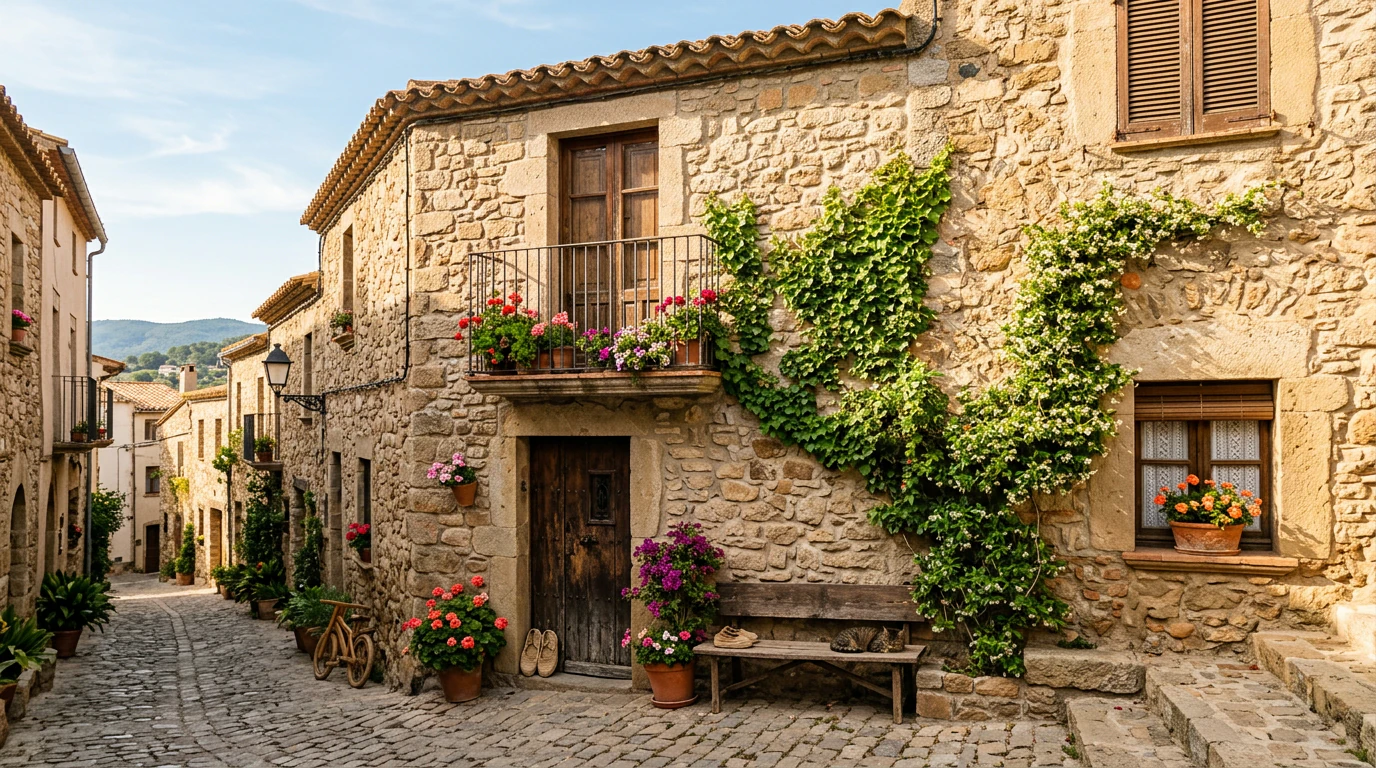
Pricing a village house is one of the toughest exercises in the rural real estate market. Unlike an apartment in an urban hub, where comparable properties are plentiful and square meters explain almost everything, village houses operate in a different kind of landscape: each property is unique, and the price depends on factors that go far beyond the built area.
In this article, we break down the key factors that determine the true value of a village house in Catalonia—from the most objective aspects—surface area, location, and condition—to the details that make the difference between a home that sells in weeks and another that stays on the market for months.
A house in the historic center isn’t the same as one on the outskirts. Within the same municipality, the price per square meter can vary by 40–60% depending on the street and area:
By far, this is the factor that creates the widest price range. A village house in its original condition—without renovation since the 1960s or 1970s—may require an investment of 60,000 to 150,000€, and the purchase price reflects that:
Pay special attention to the roof: In village houses, the roof is the critical point. A tiled-roof repair (Arab tile) costs between €8,000 and €25,000 depending on the surface area. If the house has damp issues on the upper floors, ask for a structural report before making an offer.
In village houses, the difference between built square meters and usable square meters is often larger than it is in apartments. Stone load-bearing walls can reduce usable area by as much as 15–20%. Always ask for the actual usable area, and if possible, measure it yourself during the visit.
Since 2013, an energy performance certificate is required to sell or rent a property, but in village houses it’s especially relevant. A home rated E, F, or G (the most common ratings in older, unrenovated buildings) can have an energy premium of €1,500–€3,000 per year in heating and electricity compared to a house with a certificate rating C or higher. That cost is reflected in the purchase price.
In towns with narrow streets in the old quarter, getting there by car can be tricky. A house you have to walk 100 meters from the nearest parking loses value compared with one with a garage or with the possibility of parking at the door. In small towns, the difference can be €15,000 to €30,000.
Village houses typically have fewer windows than modern apartments. A south or southeast orientation guarantees natural light throughout the day, while a house facing north or wedged between tall buildings can be dark and damp. The difference in comfort—and price—is significant.
This is the factor that tends to bring the most surprises. Many village houses in historic centers are subject to heritage protections that limit what you can do:
Always check the Municipal Urban Planning Plan (POUM) before buying. An apparently cheap house can turn into a trap if it requires comprehensive renovation using protected materials that triple the cost.
The final price is set by the market. A town with demand from foreign buyers or second-home buyers (such as those in the Alt Empordà, Garrotxa, or the Priorat) tends to hold higher prices than an interior Lleida town with no tourist appeal. The factors that influence this include:
For a quick estimate, start from the average price per square meter in the area and apply these adjustments:
The result isn’t an exact price, but it is a realistic range. For an accurate valuation, it’s always a good idea to work with a local appraiser who knows the market in the area.
Valuing a village house is more art than science, but with these eight factors you have a solid foundation to avoid mistakes. The key is to look beyond the price per square meter and understand what you’re truly buying: a house with history, with limitations, and with potential that only the right buyer knows how to recognize.
If you’re thinking about buying or selling a village house in Catalonia, at Buscomasia we help you find the fair price. Get in touch with us and we’ll advise you with no obligation.
Find your farmhouse, country house, town house or rustic farm.