
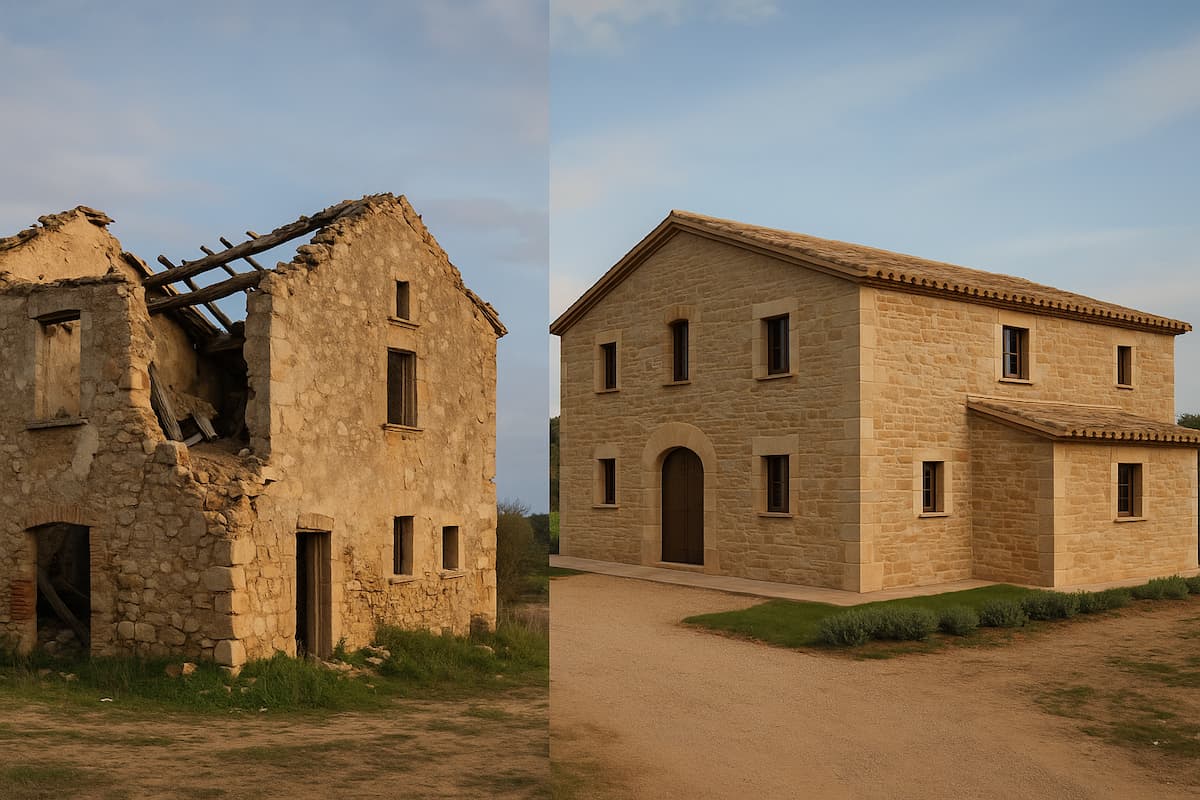
Picture this: you step into a rustic estate with stone walls, wooden beams, and endless views over the countryside. Everything screams "dream property." But what if it's just a charming façade? What if behind the old stones lies a money pit dressed up in lavender?
At Buscomasia, we've spent years helping buyers avoid costly mistakes. We've seen it all — beautifully staged masias that turned out to be legal nightmares or structural ruins. This guide will help you spot whether you're facing a real opportunity... or a trap in disguise.
We’ve come across picture-perfect masias that were crumbling on the inside: cracks in the foundation, sagging roofs, serious damp issues, or unstable load-bearing walls. These problems don’t show up in listing photos.
Always request a full technical inspection. Identifying active cracks, structural shifts or roofing issues upfront can save you tens of thousands in restoration costs.
Just because a masia looks like a home doesn’t mean it’s legally habitable. Many are on protected rural land with no residential use granted, or they’ve been renovated without a license. Some are heritage-protected and can’t be altered without special permits.
Always ask for the urban planning report from the town hall and verify whether the masia has a valid habitation certificate and the correct land use classification.
This is a common trap: rural homes advertised as “accessible” that are actually miles from paved roads — with no water, electricity or internet connection. Installing solar systems, water tanks, or private access roads can double your initial investment.
Don’t assume. Ask. And calculate all hidden infrastructure costs.
Do you want a peaceful home? A rural tourism business? A yoga retreat? Each use case requires different legal and logistical conditions — from tourist licenses to access roads, parking, zoning laws and environmental restrictions.
Don’t just buy into a dream. Make sure the property supports the lifestyle or income plan you truly have.
Pretty staging doesn’t equal smart investment. Sellers often paint walls, add rustic furniture and landscape gardens to create a seductive feel — while hiding structural flaws or unresolved paperwork.
Before falling in love, demand technical reports, licenses, and proof of legal compliance.
Some masias are in natural parks or fire-risk zones with strict limitations. Others may be too remote to be practical. Not all countryside locations are equal. Some gain value; others stagnate.
At Buscomasia, we assess not just the building, but the context: local infrastructure, regulation, access, neighborhood, and potential for future appreciation.
Buying a masia is not just a real estate decision. It’s a life project. The best ones align with your values, budget, and vision. The worst ones look great — until it’s too late.
A smart investment in rural property requires a combination of technical, legal and emotional clarity. At Buscomasia, we don’t sell illusions. We help you find truth — and then the right house.
Want us to assess the masia you're looking at? Reach out through this form and get an expert opinion before you commit.
Look for cracks, uneven flooring, roof sagging, or dampness. The best option is to hire an architect or a rural property specialist for a full inspection.
Yes, but it’s more difficult. Most banks require the property to have a valid habitation certificate and access to water, electricity and road connections. Otherwise, they treat it as agricultural land.
Absolutely. Even minor improvements must be declared. And if the property is protected or located in a special planning zone, regulations are even stricter.
Yes. We help you analyze whether a property is worth it — based on structure, legal status, and alignment with your personal project.
Find your farmhouse, country house, town house or rustic farm.